Heat press, DTF, and screen printing all put custom artwork on merch, but they behave very differently on an event floor. Speed, color range, footprint, and durability each pull in their own direction, and the right choice depends on what your activation actually needs. This guide compares the three methods the way they matter at a live event, so you can pick the one that fits your crowd, your space, and your turnaround.
Merch Troop is a Southern California live-event merch company that runs on-site stations across Orange County, Los Angeles, San Diego, Las Vegas, and nationwide. We use all three methods depending on the activation, and the comparison below reflects how each one performs when guests are watching.
How each method actually works
Heat press (with DTF or transfers)
A heat press station applies a pre-printed transfer to a garment using a controlled cycle of heat, pressure, and dwell time, finished with a clean peel. At live events the transfer is usually DTF — a full-color print on a film carrier. It is the most flexible live method: compact, fast per piece, and able to carry any artwork without setup between designs.
DTF (direct-to-film)
DTF is the transfer technology many live heat press stations rely on. Artwork is printed onto film with its own white base layer, then heat-pressed onto the garment. Because the white base is built in, DTF carries bright, full-color graphics and gradients on light or dark fabric equally well. At an event, DTF and heat press are effectively the same workflow — the press applies the DTF transfer.
Screen printing
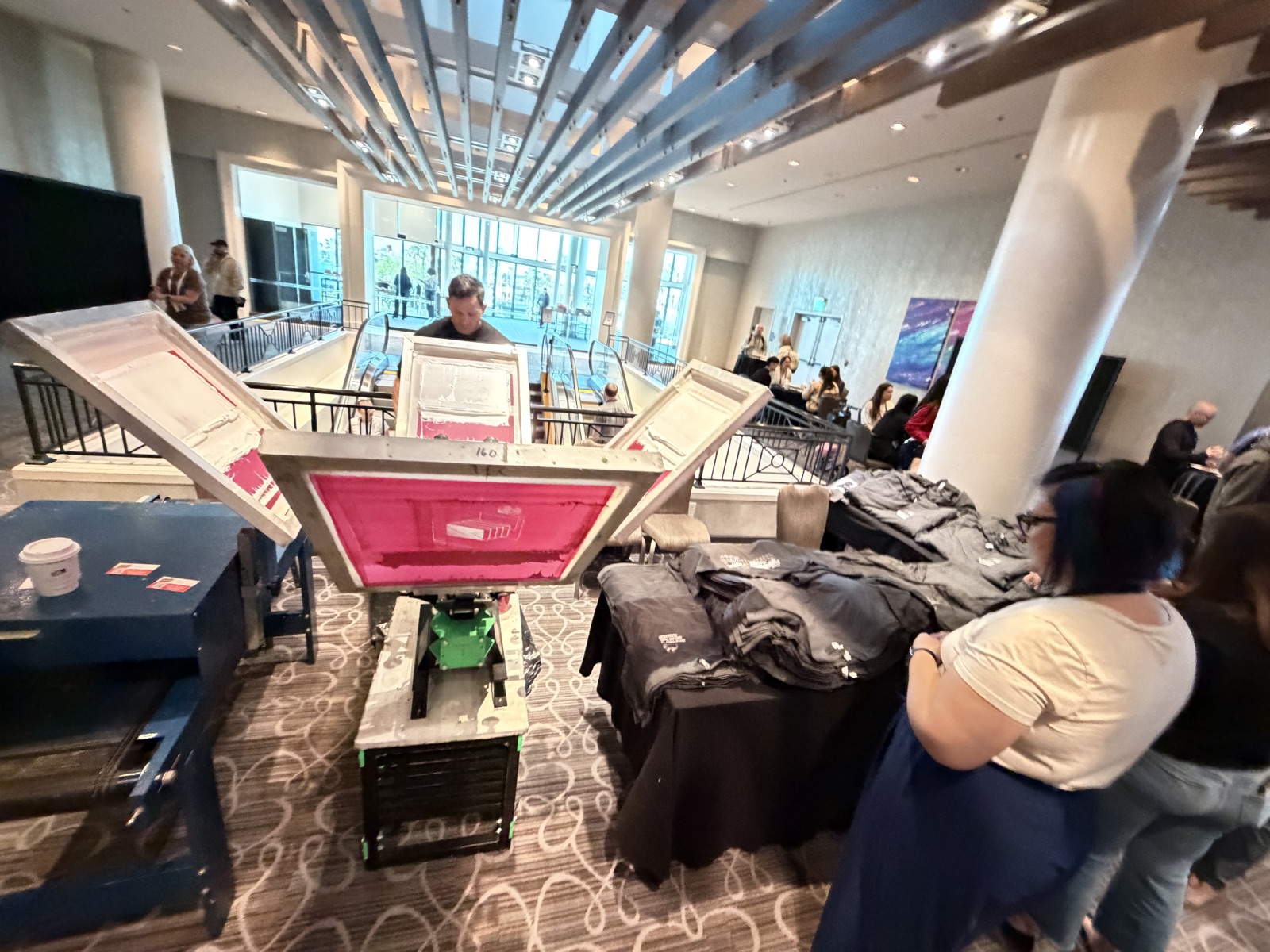
Screen printing pushes ink through a stenciled mesh screen, one color per screen. It produces a durable, vibrant, true-to-fabric print and is the gold standard for bulk production. The catch for live events is setup: each color needs its own screen and registration, which makes it heavy on space and slow to change designs on the fly.
Speed on the event floor
For live, per-guest speed, heat press with DTF wins. There is no per-design setup — the operator grabs the next transfer, presses, and hands off. Screen printing is fast once it is running a single design in volume, but switching designs or colors mid-event is slow because it means re-screening and re-registering. If your activation needs variety and quick turnaround per guest, the press station is the clear choice.
Color and artwork
DTF and heat press handle full-color, photographic artwork, gradients, and detailed sponsor logos with no extra cost per color. Screen printing delivers exceptionally vivid, durable color, but each additional ink color adds a screen and complexity — great for a bold one- or two-color logo in bulk, less practical for a full-color image at a live station. For events with rich, multi-color art or several designs, DTF is more flexible.
- Full-color and gradients — DTF / heat press, no per-color penalty.
- Bold one- or two-color logos in volume — screen printing shines.
- Personalized names and numbers — pressed as a second transfer, fast and clean.
Footprint and setup
This is where heat press separates itself for live work. A single press station fits in a 10x10 booth, a lobby corner, or a suite. A screen-printing line needs room for screens, registration, and often a conveyor dryer — a much larger and heavier setup. If your venue is tight or you are activating in an unconventional space, the compact press station is usually the only practical option.
Durability and finish
All three methods produce merch that lasts when done right. Screen printing has a slight edge in long-term wash durability and that classic into-the-fabric feel, which is why it dominates bulk apparel runs. DTF is durable and soft when pressed correctly, with bright color that holds up well to normal wear. For event merch that gets worn and washed normally, the difference is small — and the live flexibility of DTF usually outweighs it.
Which one fits your activation?
Choose a heat press with DTF when you want on-site, made-while-you-watch merch, full-color or multiple designs, personalization, and a compact footprint — the typical live activation, trade show, or conference. Choose screen printing when you are producing a large volume of a single bold design and durability and bulk economics matter more than live flexibility, often as a pre-event production run. Many programs combine both: a screen-printed base run for volume, and a live press station for the on-site, personalized experience.
Frequently asked questions
Is DTF the same thing as heat pressing?
They work together. DTF is the transfer — a full-color print on film — and the heat press is the machine that applies it. At a live event, a heat press station almost always uses DTF transfers, so the two terms describe one workflow.
Which method is fastest for a live event?
Heat press with DTF is fastest per guest because there is no setup between designs. Screen printing is fast only when running one design in bulk; changing colors or art mid-event slows it down significantly.
Can you do screen printing live at an event?
It is possible for a single bold design with the right space, but the footprint and setup make it impractical for most activations. For on-site, made-to-order merch with variety and personalization, a heat press station is the better fit.